
Aragua, Venezuela travel guide: coast, mountains and birds
Plan Aragua with confidence: roads to Choroní and Ocumare, boats to Chuao and Cepe, La Ciénaga, Colonia Tovar, Henri Pittier birding and itineraries.
Updated on November 25, 2026 · 10 min read · Leer en español

Aragua, Venezuela fits on a small map, but it rewards good planning. From Maracay you can reach a Caribbean beach, the cloud forest of Henri Pittier National Park or the cool mountain air of Colonia Tovar in a couple of hours. This guide gathers what we explain every week to travelers who visit our office in Maracay: which road to take, how long it takes, how the boats work, how many days you need and which mistakes to avoid.
Each place has its own page under Aragua destinations. Here we focus on how to combine them.
Aragua at a glance: three areas and two roads
To plan a trip around Aragua, think of three areas separated by the Coastal Range:
- The Ocumare coast: Ocumare de la Costa, El Playón, La Ciénaga, Cata, Catica and Cuyagua. You get there on the road that starts in El Limón and goes past Rancho Grande.
- The Choroní coast: the town of Choroní, Puerto Colombia, Playa Grande and, by boat, Chuao and Cepe. You get there on the road that starts in Las Delicias.
- The mountains: Colonia Tovar, in the east of the state, via La Victoria.
Both coastal roads cross Henri Pittier National Park, so the park is part of any plan. What surprises visitors most: there is no coastal road between Ocumare and Choroní. To switch coasts you have to go back to Maracay and take the other road. That is why it doesn't make sense to plan both coasts on the same day.
The roads in 2026: Maracay–Choroní and Maracay–Ocumare
Maracay–Choroní
- Route: about 38 km of mountain road, from the Las Cocuizas checkpoint in northern Maracay to Choroní.
- Time: by car, allow an hour and a half to two hours. Buses leave from the Maracay bus terminal, more often at weekends.
- What the road is like: narrow, with hairpin bends and stretches along steep drops. It climbs into the cloud forest and then down to the coast.
Status in November 2026. In October the road was closed by landslides after heavy rain. On November 9, the Girardot municipality announced repair works:
- retaining walls and new asphalt;
- traffic remains open "under safety and preventive control schemes";
- its assessment rates 16 of the 38 km as high or very high risk;
- the most delicate stretch is between km 5.5 and km 11.7.
In practice, we check whether the road is open on the day before you set off, especially if it rained the night before.
Maracay–Ocumare de la Costa
- Route: the road starts in El Limón and climbs to Rancho Grande and Portachuelo Pass. From there it drops down to the coast, about 50 km in total.
- Time: by car, around an hour and a half.
- What the road is like: a mountain road too, with fog at the top and landslides after heavy rain.
- On the coast: Cata is a few minutes from Ocumare.
Tips for both roads
- Drive up and down in daylight. Leave early so you reach the coast before noon.
- Fill up the tank in Maracay.
- If bends make you carsick, take something before you leave, not halfway.
- Keep your ID or passport handy: there are checkpoints along the way.
- After several days of rain, ask about the road before you go. You can always message us.
The Ocumare coast: Ocumare, La Ciénaga, Cata and Cuyagua
Ocumare de la Costa is the base, with guesthouses, the El Playón seafront and the fishing boats (peñeros). It's the easiest choice for a weekend with kids because almost everything is close by. We have two 3-day, 2-night packages, one at Posada Ecolodge and one at Posada Samiana. Both include the La Ciénaga trip.
La Ciénaga is a calm bay surrounded by mangroves:
- you get there by peñero from the La Boca jetty, in about 15 minutes depending on the sea;
- it has two spots for the day, La Piscina and La Playita;
- there are no services on the beach: bring water, food, a hat and a bag for your trash;
- our tour runs on Saturdays, Sundays and public holidays, with pickup at your guesthouse.

Full day
Ask for priceCata is a wide, crescent-shaped bay a few minutes from Ocumare, with little Catica next to it. Cuyagua, a bit further on, has strong waves and is known among surfers. Swim only where the sea is calm and follow local advice: the waves change from one day to the next.
The Choroní coast: Puerto Colombia, Playa Grande, Chuao and Cepe
Choroní is the colonial town, with its square and church, a little inland. Puerto Colombia sits by the sea: most guesthouses, the seafront and the boats are there. Playa Grande is a few minutes' walk away. The streets are narrow, so leave the car at your guesthouse and get around on foot. At weekends there is often drumming on the seafront at sunset.
Boats leave from the Puerto Colombia seafront and take small groups. The rides are short, but they depend on the sea:
- to Chuao, about 20 minutes;
- to Cepe, 25 to 30 minutes.
Before you board, agree on the return time and the price, and ask for a life jacket. If the sea is rough, the trip is rescheduled: don't push it.
Chuao has no road:
- you get there by boat or on a demanding mountain trail;
- the village is about 5 km inland from the beach;
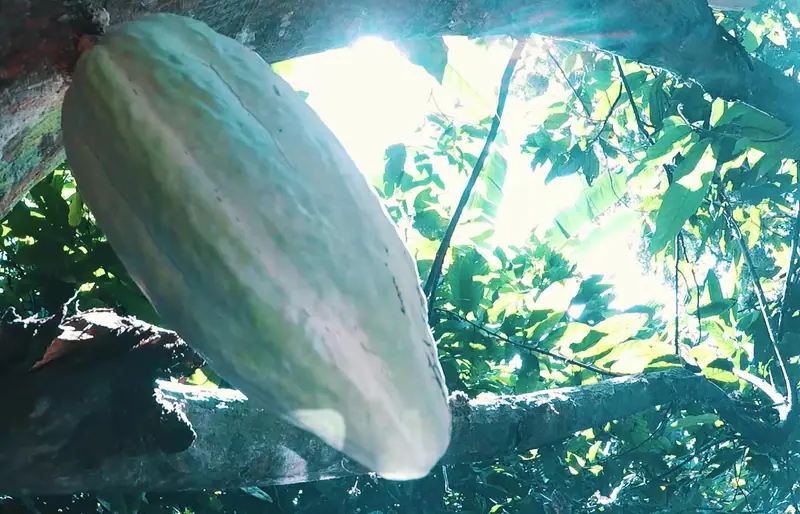
- its cacao has a protected designation of origin, and the beans dry in the sun in front of the church;
- at Corpus Christi the Dancing Devils come out, a tradition UNESCO inscribed in 2012 as Intangible Cultural Heritage of Humanity.
Cepe is a quieter beach, good for families and couples who want a day at the sea away from the crowds.
Henri Pittier and birdwatching: Rancho Grande and Portachuelo
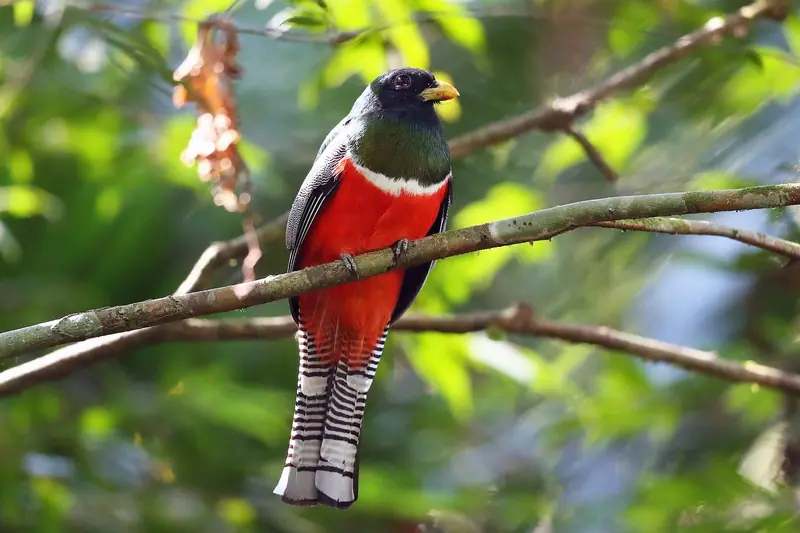
Henri Pittier is Venezuela's first national park, created in 1937. It covers about 107,800 hectares and runs from the sea to more than 2,300 meters above sea level. It has more than 500 recorded bird species, including the sorocuá (a trogon), the bird our agency is named after.
There are two key birding spots, both on the Ocumare road:
- Rancho Grande Biological Station. It is run by the Central University of Venezuela. The cloud forest around it is the classic birding area. If you want to enter the station itself, it must be arranged in advance.
- Portachuelo Pass. It is a gap in the range at about 1,136 meters that birds, bats and insects fly through, including many migrants from the north.
Tips for a birding trip:
- Head out before dawn: the early morning hours are the most active.
- Bring layers and a rain jacket, because fog and rain can turn up at any time of year.
- Wear closed shoes with good grip.
- Keep quiet on the trails.
We run birdwatching trips from Maracay with local guides, subject to availability.
Colonia Tovar: Aragua's mountain town
Colonia Tovar was founded in 1843 by German immigrants and sits more than 1,700 meters above sea level:
- Climate: cool by day and cold at night, often foggy.
- What to eat: strawberries, sausages, pastries and craft beer.
- Getting there: from Aragua you go up via La Victoria, and from Caracas via El Junquito. Both are mountain roads.
- When to go: weekends and public holidays are busy; on weekdays the town is quieter.
If you're short on time, the 360° Tour covers the essentials in 2 hours and 30 minutes, with pickup at your lodging. If you want to stay, there's the 3-day, 2-night getaway.

2 h 30 min
Ask for priceMaracay as your base
Maracay is the natural starting point:
- Gateways: El Limón is the gateway to the Ocumare road and Las Delicias to the Choroní road. La Victoria, toward Caracas, leads to Colonia Tovar.
- Services: there are hotels, restaurants and the bus terminal.
- If you're short on time: staying in Maracay lets you take day trips to the coast or the mountains without changing hotels every night.
If you fly in, the nearest airports are Valencia and Maiquetía (Caracas). Since September 2026, Maiquetía has been operating from temporary terminals after the June earthquakes. We can quote your transfer to match your flight.
How many days? Tried-and-tested itineraries
1 day from Maracay
- Sea: leave at 6:00 for Ocumare, do the La Ciénaga tour and drive back before late afternoon.
- Mountains: go up to Colonia Tovar in the morning, take the 360° Tour and have lunch there.
- Birds: from 6:00 to 10:00 at Rancho Grande and Portachuelo, then lunch in Maracay.
A weekend (3 days, 2 nights)
- Ocumare: arrive and walk the seafront on day 1, go to La Ciénaga on day 2, and visit Cata before heading back on day 3.
- Choroní: arrive in Puerto Colombia, take a boat to Chuao or Cepe the next day, and enjoy Playa Grande on the last morning.
5 days to see both coasts
- Day 1: Maracay to Choroní; afternoon at Playa Grande.
- Day 2: boat to Chuao, visit the village and its cacao, and back.
- Day 3: drive down to Maracay and up to Ocumare via Rancho Grande, with a birding stop on the way.
- Day 4: La Ciénaga.
- Day 5: morning at Cata and return.
7 days with the mountains
Add two nights in Colonia Tovar to the 5-day plan. Finish your trip there: the cool air is a nice contrast after the beach.
When to go
- Dry season: roughly December to April. It brings more settled days for the boats and the roads.
- Rainy season: roughly May to November. Everything is greener and birds are active, but landslides on both roads are more frequent.
- Busy dates: Carnival, Easter week, August and December. Book ahead.
- Festivals worth the trip: San Juan in Choroní (June 23 and 24), Corpus Christi in Chuao (date varies, between May and June) and the Colonia Tovar Oktoberfest (October, depending on each year's program).
What to pack
- Cash in US dollars, in small bills in good condition, plus some bolívars. On the coast, phone signal and card machines are unreliable.
- Sunscreen, a hat and sunglasses.
- Insect repellent: bugs bite in the mangroves and at dusk.
- A dry bag for your phone on the boats.
- Water and snacks for beaches without services.
- A jacket for Colonia Tovar or an early birding trip.
- Motion-sickness tablets if bends or boats get to you.
Practical safety and common mistakes
- Driving the mountain roads at night. It's the most common mistake and the easiest to avoid.
- Trying to do Choroní and Ocumare on the same day. There's no coastal link.
- Setting off without checking the road after heavy rain. There were closures in 2026.
- Not agreeing on the boat's return time. Do it before you board and save the boatman's number.
- Swimming at beaches with strong waves, like Cuyagua, if you don't know the sea.
- Leaving valuables in sight in the car or unattended on the sand.
- Lighting fires or leaving trash in the park. Henri Pittier has suffered forest fires. Whatever you bring in, take back out.
Sources
Facts checked on November 25, 2026:
- Choroní road status and repairs: El Diario, November 9, 2026 (Spanish).
- Closure due to landslides: La Patilla, October 11, 2026 (Spanish).
- Dancing Devils: UNESCO Intangible Heritage, 2012.
- Maiquetía reopening in temporary terminals: El Nacional, September 1, 2026 (Spanish).
Frequently asked questions
How long does it take to get from Maracay to Choroní?
By car, an hour and a half to two hours. It's about 38 km of mountain road from the Las Cocuizas checkpoint, and in November 2026 the road is under repair, with controlled traffic. Travel in daylight and check conditions if it has rained.
Can you drive from Ocumare de la Costa to Choroní along the coast?
No. There's no coastal road between them. You have to go back to Maracay and take the other road, so plan separate days for each coast.
How do you get to Chuao?
By boat from the Puerto Colombia seafront in Choroní, about 20 minutes depending on the sea. From the beach, the village is about 5 km inland. There's also a demanding mountain trail, best done with a guide.
When is the best time to visit Aragua's beaches?
The dry season, roughly December to April, brings more settled days for boats and roads. Avoid periods of heavy rain, and book ahead for Carnival, Easter week, August and December.
Where is the best birdwatching in Henri Pittier?
The classic spots are the area around Rancho Grande Biological Station and Portachuelo Pass, both on the Maracay–Ocumare road. Ideally, be there at dawn with a local guide.
How many days do I need for Aragua?
A weekend is enough to get to know one coast well. With 5 days you can see both coasts and go birding, and with 7 days you can add Colonia Tovar.

